
More Than A Stop
Mobility hubs are spreading across Europe, yet many fail to reflect the realities of Mediterranean cities. What if hubs were designed not just as transport nodes, but as everyday real places shaped by climate, culture, and behaviour? A shift in perspective may hold the key to successful implementation.
On a hot summer afternoon in a Mediterranean city, movement slows down. A commuter steps off a bus, hesitates for a moment under the sun, then crosses the street towards a small, shaded area. There, a shared e-scooter is parked beside a bench and a water fountain, a digital display showing arrival times right in the back. It is not a station, nor quite a square, but something in between: a space that enhances the commuter’s experience. It is a mobility hub, and even though we cannot see it, we can easily imagine its benefits.
Across Europe, mobility hubs are gaining momentum as a key tool for enabling multimodal travel and reducing car dependency. Yet many existing models originate in cities such as Antwerp and Amsterdam, where transport systems, climate, and daily rhythms differ significantly. Transferring these models without proper adaptation may result in creating spaces that function in theory, but not in practice.
In Mediterranean cities, mobility is about more than efficiency: it is shaped by heat, density, social interaction, and seasonality. As such, mobility hubs cannot be treated as standardised infrastructure; they must be rethought as places embedded in everyday urban life.
Why the Mediterranean is not a minor variation
Understanding what makes mobility hubs work in the Mediterranean requires looking beyond transport systems and into the lived experience of cities, where climate, social habits, and seasonal rhythms all shape the way people move.
Climate, for instance, is a defining factor: high temperatures, particularly during extended summer periods, directly influence when and how people move, turning walking distances and waiting times that may seem reasonable elsewhere into significant barriers without shade, cooling elements, or comfortable spaces. A hub that ignores these thermal realities risks becoming a place people avoid altogether.
Urban form adds further constraints. Dense, often historic neighbourhoods leave little space for large-scale interventions, calling for precision rather than scale, and favouring small, well-placed hubs that integrate into existing streets rather than competing with them.
Public space also carries a particular meaning in Mediterranean areas, where streets and squares are places of interaction where daily life unfolds, as much as movement. A mobility hub that overlooks this social dimension risks remaining merely functional and invisible to users.
Seasonality further reshapes demand, with tourist flows dramatically altering mobility patterns by placing pressure on certain areas while leaving others underused. Flexibility is therefore essential, extending beyond the services offered to include how space is allocated, adapted, and managed over time.
Insights emerging from recent work across Mediterranean cities in GREENMO (Promoting Green and Inclusive Mobility hubs for greener MED living areas by leveraging citizens’ real needs), an Interreg EuroMED project, show a consistent pattern: mobility hubs succeed prioritising when they respond to local conditions, prioritising usability, comfort, safety, and local integration over purely technical optimisation.
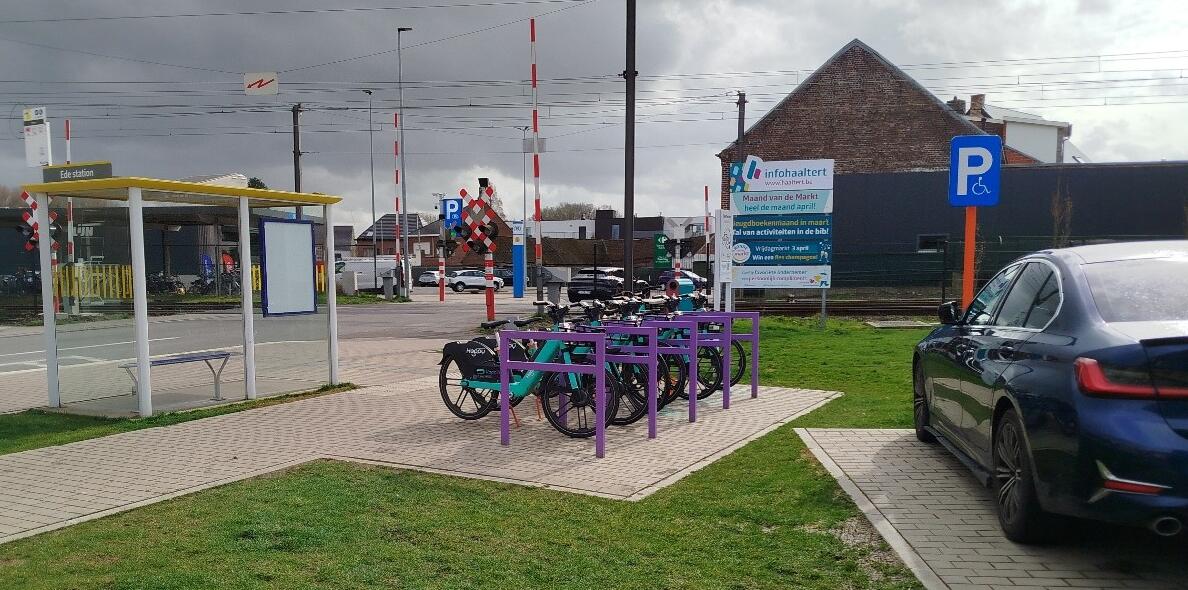
A mobility hub in Ghent, Belgium — Credit: Vasiliki Amprasi
A Mediterranean framework
Translating this understanding into practice requires, beyond design adjustments, a strategic framework that is both structured and flexible, and connects user needs, spatial design, services, and governance into a coherent approach.
Work developed in the GREENMO project outlines a set of pillars that support implementation:
Diverse and reliable mobility options
At the core of any hub lies the availability of transport choices: public transport, shared micromobility, and on-demand services must coexist in a way that supports seamless transitions. Without this diversity, hubs cannot function as connectors within the wider system.
Services that support everyday life
Mobility alone is not enough. Users value non-mobility amenities such as seating, shade, parcel lockers, or small retail functions, and they see them not as extras, but as part of the experience: these elements transform hubs from transfer points into places people are willing to use.
Attractive, safe and human-centred design
Perceived and actual safety, comfort, and accessibility are decisive. Lighting, visibility, and inclusive design influence whether people trust and return to a hub, especially in rural areas. In Mediterranean contexts, comfort, mainly in relation to protection from heat, is a key success factor.
Clear and accessible information
Even well-designed mobility hubs fail when users cannot understand how to navigate them: physical signage, real-time information, and intuitive digital tools are essential for reducing uncertainty and enabling multimodal travel.
Supportive governance and coordination
Perhaps the most underestimated dimension is governance. Mobility hubs sit at the intersection of multiple actors, such as municipalities, operators, and service providers, and without coordination between all parts, integration remains theoretical.
Taken together, these pillars form a practical pathway from concept to implementation. They do not prescribe a single model, but they help cities avoid common pitfalls while adapting solutions to their specific context. At the same time, they highlight a simple but often overlooked truth: mobility hubs are organisational systems as much as they are physical spaces.
Lessons emerged
Based on the extensive research undertaken in the GREENMO project with the participation of 60 stakeholders and over 1,400 citizens in 6 countries (Greece, Cyprus, Malta, Italy, Spain, Bosnia and Herzegovina), a recurring lesson from Mediterranean cities is that the main challenge lies in bridging the gap between concept and implementation.
In parallel, institutional fragmentation remains a key obstacle. Different departments and stakeholders often operate with limited alignment, slowing down decision-making processes; at the same time, uncertainty around funding and long-term operation can hinder commitment.
Equally important is the integration of mobility hubs within broader planning frameworks, such as Sustainable Urban Mobility Plans (SUMPs). When aligned with wider strategies, hubs can act as catalysts rather than isolated projects. This highlights a crucial shift: implementation is not a linear process, but an iterative one. It requires engaging, understanding, designing and planning, testing, monitoring and adapting over time.
A change in perspective
As mobility hubs continue to gain attention across Europe, Mediterranean cities have an opportunity to lead by redefining the existing models. This begins with a change in perspective, moving from infrastructure to experience, from centralised hubs to neighbourhood networks, and from fixed planning to iterative development.
Mobility hubs, when designed as real places for all, can do more than connect modes: they can support more liveable, resilient urban environments that reflect how people actually move and interact.
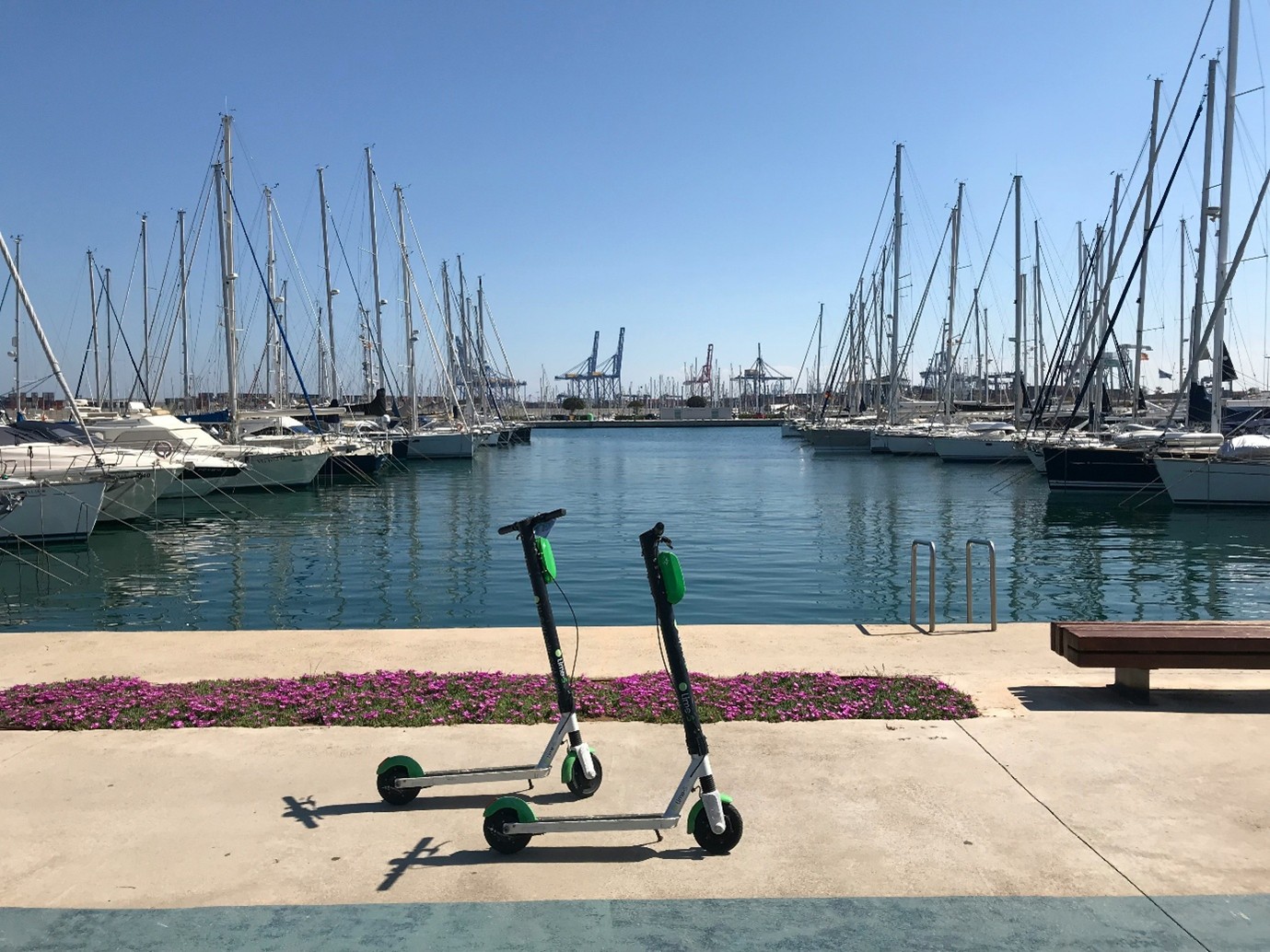
Shared micromobility at a touristic area — Credit: Lyle Hastie, Unsplash
Click here to read the article in its original format.
About the authors:
Vasiliki Amprasi, Research Associate, University of West Attica. Amprasi is a Civil and Transportation Engineer, holding a Diploma (MEng) and a MSc with full scholarship. She is a Research Associate at the University of West Attica, also working as a freelance transportation consultant. Having experience in European and national projects, her work focuses on sustainable mobility, integrated urban planning and participatory processes.
Panagiotis Papantoniou, Associate Professor, University of West Attica. Papantoniou is an Associate Professor at the Department of Surveying and Geoinformatics Engineering at the University of West Attica. He has over 15 years of experience in the transport sector as an engineer, academic, advisor, and decision maker. His expertise focuses on road safety, intelligent transport systems, and urban mobility, with extensive involvement in several European research projects.
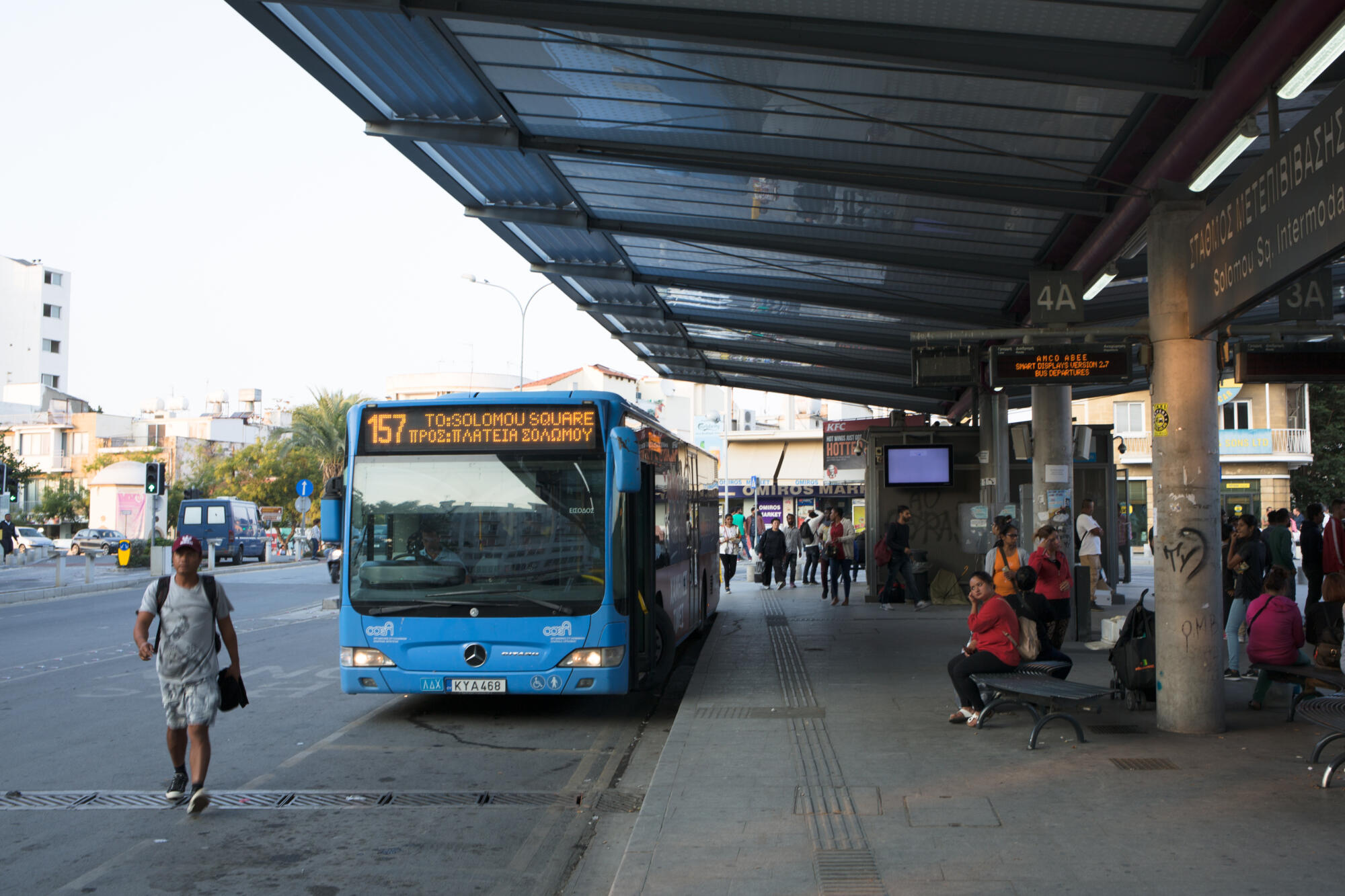 Credit: Yuriy Stankevich, Shutterstock