
In The Train Of Thought
Urban rail faces increasing pressure to decarbonise, expand capacity, and improve efficiency within constrained systems. Mitsubishi Electric Europe’s Masayuki Saotome highlights that the next phase of innovation depends less on individual technologies and more on data-driven integration across infrastructure, energy systems, and urban ecosystems.
Interview with Masayuki Saotome, elaborated by Alessia Giorgiutti.
POLIS: Across many European cities, rail is being asked to do more with constrained infrastructure, tight budgets, and decarbonisation pressure. What is the single biggest constraint rail systems face today that technology can realistically address?
 Masayuki Saotome: One of the biggest constraints facing rail systems today is the need to simultaneously achieve decarbonisation, higher transport capacity, and cost efficiency while working within ageing infrastructure and limited investment budgets.
From our perspective, this challenge can be addressed through two complementary frameworks: the first is a technological contribution at the component and subsystem level—the core technologies that support railway vehicles and infrastructure; the second is a data-driven, system-level optimisation approach covering the entire railway operation, including wayside infrastructure.
POLIS: OK, let us look at the core technologies, then.
MS: In the power domain, innovation in power electronics continues to deliver significant improvements in efficiency and operational performance. Examples include high-efficiency traction converters using Silicon Carbide (SiC) semiconductors, synchronous reluctance motor technologies that improve efficiency while reducing rare-earth dependency, and mechanical innovations such as self-cooling systems using airflow generated during train operation—all technologies that contribute to lower energy consumption and cooling requirements, lighter systems, improved maintainability, and longer infrastructure lifetime.
Mitsubishi Electric has contributed to the development and deployment of many of these technologies and continues to invest in next-generation railway systems.
POLIS: Got it. And what about system-level optimisation?
MS: The thing is, improving the efficiency of individual components alone is no longer sufficient.
We need to collect, visualise, and analyse operational and energy-related data across trains, substations, stations, and energy storage systems in real time, so we can understand where regenerative energy is generated, transferred, or lost, and optimise coordination between rolling stock and infrastructure. This enables operators to improve not only energy efficiency, but also peak load management, transport capacity, operational resilience, and infrastructure utilisation across the entire railway network.
Within this system approach, energy storage technologies, supported by intelligent power conversion systems and energy management platforms, play a key role in future railway energy optimisation. While onboard batteries are often associated with replacing diesel operation on non-electrified lines, their potential applications are much broader. They can support regenerative energy absorption, substation load reduction, peak shaving, emergency resilience, station energy hubs, and integration with surrounding e-mobility ecosystems. In many cases, storage systems can also help defer or reduce expensive infrastructure upgrades by complementing ageing substations and existing power supply systems.
Going forward, we believe the industry needs more opportunities to demonstrate and validate these technologies not in isolation, but as integrated urban mobility and energy solutions.
POLIS: How can regenerative energy be integrated with wider city energy ecosystems?
MS: In the future, integration with the wider city ecosystem will become essential rather than optional.
Regenerative energy is generated instantaneously, and railway systems alone cannot always absorb it efficiently. This makes coordination with stations, nearby buildings, energy storage systems, and urban energy networks increasingly important.
This is not only about energy efficiency: In Europe, the concept of ‘dual use’ is gaining relevance. Stations can, for example, function as emergency shelters and resilience hubs during blackouts or disasters. By integrating Energy Storage Solution (ESS) technologies and regenerative energy systems, they can maintain an essential power supply even in emergencies.
Beyond resilience, stations should also be connected with surrounding e-mobility ecosystems. Integration with EV charging, e-bikes, and electric buses can transform stations into urban energy hubs. As stations become more active and multifunctional, they attract people, businesses, and services, contributing directly to urban revitalisation. We believe stations should no longer be viewed simply as transport facilities, but as platforms for creating urban value.
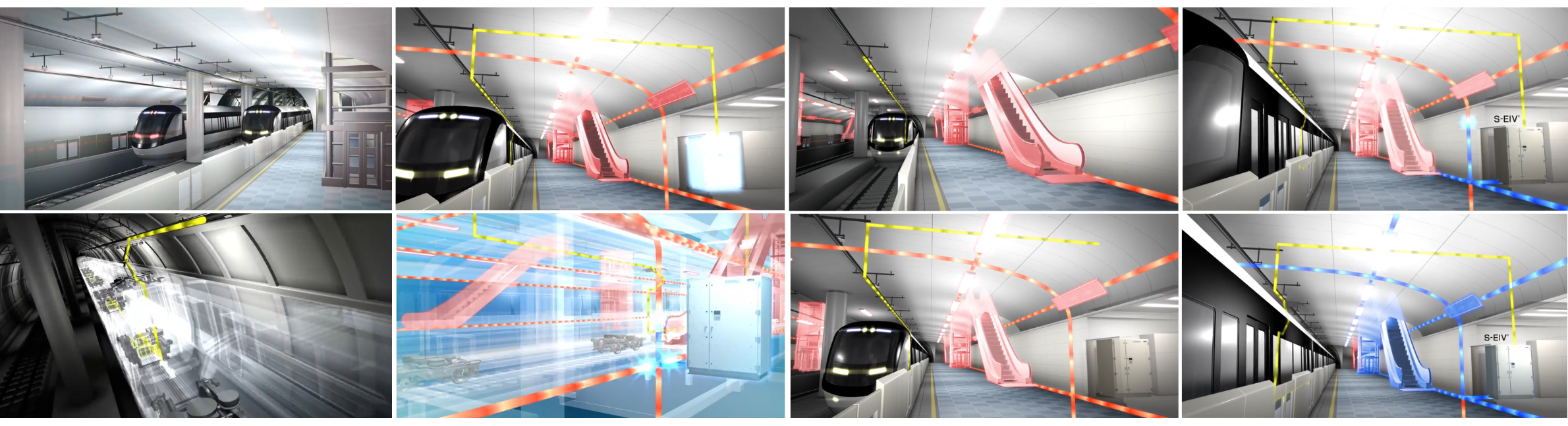
Station Energy Saving Inverter (S-EIV) developed by Mitsubishi Electric — Credit: Mitsubishi Electric
POLIS: Mitsubishi Electric invests heavily in simulation and digital twins. At what point does simulation move from being a design and testing tool to something that actively shapes operational decisions?
MS: Simulation evolves from a design tool into an operational decision-making tool when it becomes connected to real-time data and AI. The objective is not only to analyse data, but to understand and optimise the behaviour of real-world infrastructure, vehicles, energy systems, and operations.
The introduction of AI will further accelerate the shift. Equally important is the accumulation and sharing of case studies across different cities and transport modes. Successful experiences from railways, buses, ports, and airports can significantly speed up decision-making by governments, municipalities, and transport authorities.
While cities differ in size, budget, and resources, many of their core challenges are shared: decarbonisation, equitable access to public transport, and improving quality of life. For that reason, the industry should move toward open, accessible platforms where stakeholders can access knowledge, evaluate solutions, and learn from proven experience regardless of organisational scale.
In the future, this may evolve into marketplace-like platforms offering access to solutions, funding schemes, Proof of Concept (PoC) examples, KPIs, implementation results, and operational best practices. This would reduce the need for each city to start from scratch, significantly accelerate deployment, and help smaller or resource-constrained cities access expertise more easily.
POLIS: Stations are increasingly evolving beyond transport nodes into multifunctional urban hubs. Where do you see the greatest opportunities for innovation in station environments, and how can rail technology providers help cities unlock their wider value?
MS: Transit-oriented development around stations is already well established globally. However, levels of safety, convenience, and quality still vary significantly by country and region. Japan illustrates how stations can function not only as transport nodes, but also as centres for commerce, resilience, public services, and community life, demonstrating how transport infrastructure can become a catalyst for long-term economic activity.
As station value increases, so does the value of the surrounding area: they become magnets for people, businesses, services, and investments, contributing to long-term urban revitalisation.
Technology can further enhance this role. Energy management systems and passenger flow analysis can turn stations into resilient urban energy hubs, supporting emergency functions during disasters or power outages, while also optimising energy consumption in normal conditions. These same systems can improve in-station services and commercial experiences, improving convenience and attractiveness for passengers and local communities. Better integration of mobility data and operational systems can evolve Park & Ride concepts and strengthen last-mile connectivity through shared mobility, e-bikes, e-buses, and other urban transport services.
Going forward, stations will increasingly integrate energy systems, resilience functions, Mobility-as-a-Service (MaaS) connectivity, real-time crowd management, and commercial as well as public services into a single urban platform. This cannot be achieved by infrastructure managers or railway operators alone: it requires collaboration between local governments, railway companies, infrastructure managers, private partners, and mobility providers. We believe the most sustainable approach is one where all stakeholders, including passengers and local communities, share in the long-term value created through coordinated development.
POLIS: You operate globally, including in Asia, North America, and Europe. Where do you see the biggest differences in how innovation is deployed in rail systems? Are there practices from outside Europe that could realistically be transferred, or are governance factors the main barrier?
MS: The European market has a strong preference for proven solutions. Even when technologies clearly offer advantages, deployment often requires PoCs, pilot projects, or long validation periods if there is no European reference case. This reflects the railway sector’s emphasis on safety, reliability, and public accountability, but it can slow adoption.
Europe is also not a single market: each country—and often each city—differs in operational conditions, regulations, procurement structures, and political priorities, which further increases complexity. As a result, technologies that could deliver societal benefits may take longer to scale. This is why closer collaboration between public-interest organisations such as POLIS or the Union of the Baltic Cities and private-sector companies is important. By combining municipal problem awareness with technical capability and innovation from industry, it becomes possible to reduce risk while accelerating social and environmental impact.
In most cases, successful deployment in Europe requires phased introduction, collaboration with local partners, and evidence-based implementation rather than purely technology-driven rollout.

Liverpool Station in London, United Kingdom — Credit: William Perugini, Shutterstock
POLIS: Rail systems are long-lived assets, often involving decades-long relationships between cities and suppliers. How do you build collaborative and long-lasting partnerships without creating lock-in?
MS: The key is maintaining fair and transparent technical evaluation. While localisation is increasingly emphasised for economic security reasons, excessive localisation can itself create lock-in and limit access to necessary technologies.
At the same time, the sector faces geopolitical, economic, supply-chain, and industrial capacity constraints, making it harder to ensure consistent support across all regions. Excessively strict domestic sourcing requirements can, in some cases, risk undermining continuity of essential public transport services. Traditionally, various risk mitigation approaches have been applied, such as second sourcing and obsolescence strategies, but these can sometimes increase cost and delivery time due to regulatory and certification requirements, including homologation processes.
Safety, reliability, and passenger comfort remain the highest priority, but procurement frameworks should be flexible enough to avoid structural lock-in. Evaluation should also go beyond Capital Expenditures (CapEx) and include lifecycle performance, energy efficiency, maintainability, resilience, and data-driven value creation.
Greater data sharing and more flexible regulatory frameworks are also needed to enable continuous upgrades, retrofits, and functional improvements across asset lifecycles.
Ultimately, trust in public transport depends on the ability to provide reliable alternatives and flexible technical solutions even as conditions change. We see this combination of engineering capability and problem-solving as one of the most important expectations for future technology providers.
POLIS: If you could remove one layer of complexity from today’s urban rail systems to accelerate innovation, which would it be, and why?
MS: If I could remove one layer of complexity from today’s urban rail systems, it would be the fragmentation between stakeholders, responsibilities, and value creation structures. In many cases, infrastructure managers, operators, local authorities, and private companies are separated not only institutionally, but also by incentives, data ownership, investment priorities, and long-term objectives. While these structures were often introduced for transparency or competitiveness, they can slow innovation, hinder system optimisation, and delay technologies that could deliver clear social and environmental benefits.
At the same time, urban public transport systems still rely heavily on public funding and are often viewed primarily as cost centres rather than platforms for creating wider urban value.
I believe future urban rail systems require a more integrated approach, in which public authorities, operators, infrastructure managers, and private-sector companies work together not only to maintain infrastructure, but also to create commercial, energy, data, resilience, and social value across mobility ecosystems. For example, stations can evolve into urban energy hubs, resilience centres, commercial platforms, and connectors for last-mile mobility. If the value created through these activities is reinvested into operations, service quality, and urban development, innovation can become more financially sustainable and socially impactful.
In short, reducing fragmentation between stakeholders and enabling more collaborative, value-oriented ecosystems would, in my view, be one of the most effective ways to accelerate innovation in urban rail.
Click here to read the article in its original format.
About the contributors:
Interviewee: Masayuki Saotome, Business Unit President - Transportation, Mitsubishi Electric Europe. Saotome is a senior executive at Mitsubishi Electric Europe, overseeing transportation and infrastructure business development across Europe. With extensive international experience in rail systems and sustainable urban mobility, he focuses on integrating mobility, energy, and digital innovation to promote greener, more resilient cities through public-private partnerships.
Interviewer: Alessia Giorgiutti, Communications & Membership Lead & Co-Coordinator Just Transition, POLIS. Giorgiutti coordinates POLIS' corporate communications and magazine, has worked in several EU-funded projects, and supports the POLIS staff in all things communications (and has been doing so for the past 7 years!). Her work focuses on making accessible and inclusive content about transport, as well as highlighting the experiences of marginalised users.
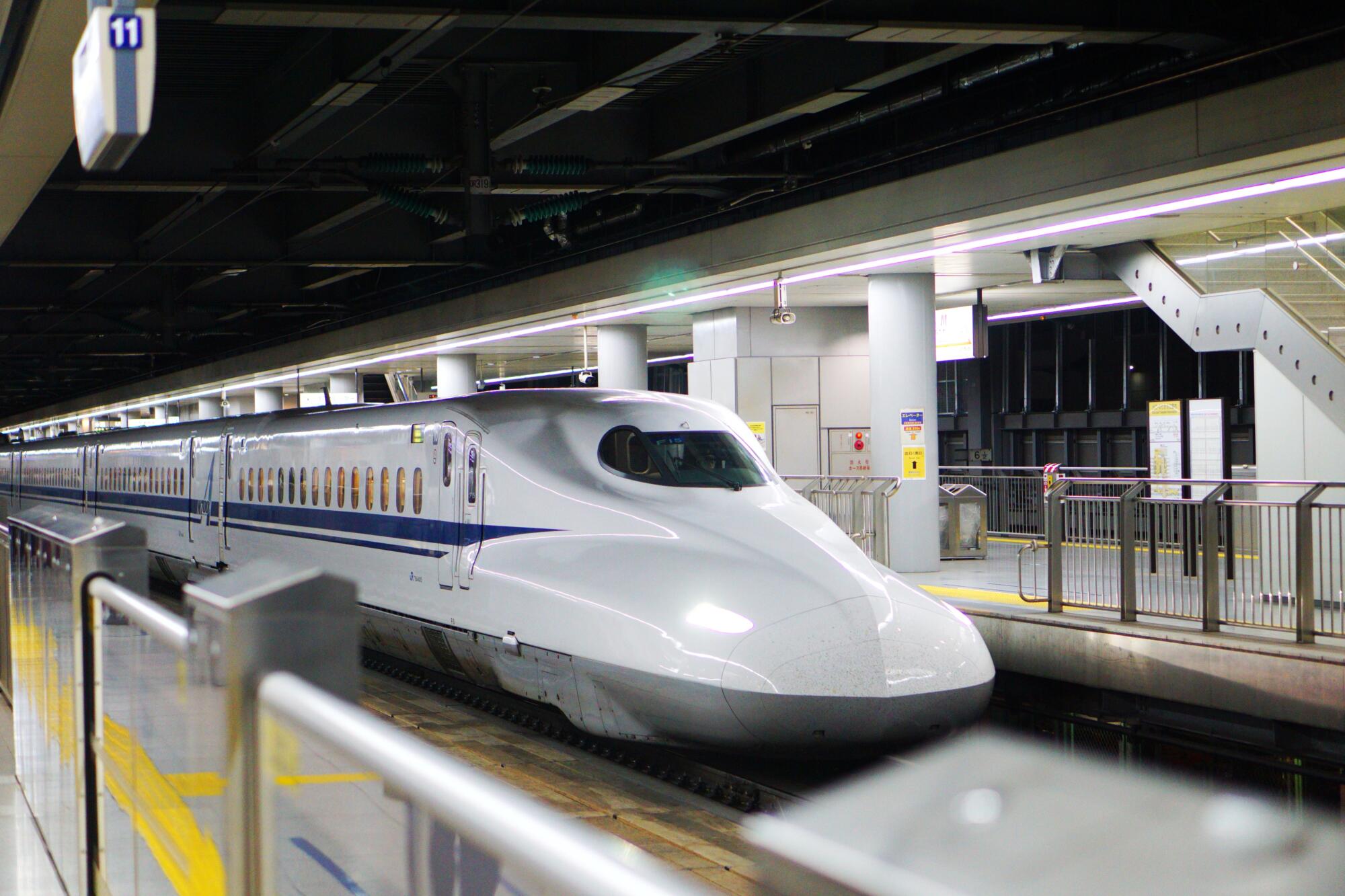 Credit: JapanNewbie, Shutterstock