
Epic Fails
Urban freight is not always smooth: from apps that van drivers ignore, to parcel lockers that never get plugged in, European cities have learned the hard way. Discover how embracing these ‘epic fails’ can foster more resilient solutions for sustainable logistics.
A perfect app that no van driver wants to use. A parcel locker just waiting to be connected to the electricity grid. A collaborative logistics pilot with no private partner companies willing to join. These are not unusual stories for anyone involved in European urban freight projects. Yet they rarely make it into reports or conference presentations.
Instead, the spotlight usually shines on 'best practices' and technological breakthroughs, while the setbacks are quietly forgotten. But behind every success story lie many small, messy failures that shape the path forward.
Several such 'epic fails' from the cities of Leuven, Groningen, Mechelen, and Le Havre Seine Métropole illustrate how acknowledging missteps has helped improve governance, refine tools, and rebuild trust between public and private actors. Embracing failure, rather than hiding it, has become one of the most valuable and effective strategies to drive real progress in sustainable urban logistics.
When good ideas go wrong
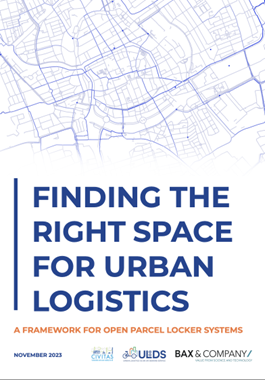
This ULaaDS study, developed by Bax Innovation, supported the City of Groningen to better integrate logistics services (such as parcel lockers) within its public spaces, ULaaDS
In Leuven, the FlexCURB project set out to create a digital tool for logistics drivers. The concept was simple: real-time information about loading and unloading zones, allowing drivers to reserve space while giving the city better data on parking demand. On paper, it was an elegant solution—in practice, it hit a wall. Most van drivers did not use smartphones on the road, nor did they plan routes digitally. Booking a loading bay through an app was simply not part of their daily routine: many ignored official zones altogether, opting for the practicality of parking on the curb.
Beyond behaviour, regulatory and technical challenges emerged. Due to misalignment with national regulations, dynamic curb management could only be simulated within a living lab, and the FlexCurb app relied on manual data updates—too time-consuming for city staff. As a result, the data-driven approach was compromised, limiting the effectiveness of the FlexCurb app.
FlexCURB’s failure was not technological, but human. The project began with a technical concept rather than an understanding of real user needs. But this setback led to a shift: newer projects, such as GLEAM NSR and Smart City Logistics, now start by co-creating user stories and sessions before discussing technology.
In Groningen, another challenge emerged from an apparently simple idea: installing a parcel locker to facilitate last-mile deliveries. The project, part of ULaaDS, faced unexpected bureaucratic barriers. To install the locker, the city needed a land-use agreement, a building permit, and an electricity connection. The existing power source for a nearby bike-sharing system could not be shared, and a new connection required a waiting period of three to six months. As a result, the pilot stalled before it could even begin.
A similar story unfolded in Le Havre, where an e-commerce operator installed a bright, eye-catching parcel locker in a heritage area. Its colours clashed with the surrounding architecture, and after complaints from the local council, the Mayor requested its removal. What was intended as a step towards modern, convenient delivery instead became an example of poor urban integration.
In Mechelen, the goal was to make the 'first mile' more sustainable by bundling parcels from local shop owners for courier collection. A green operator was ready to handle the pick-ups and deliver them to various company hubs. However, the collaboration among logistics service providers, as well as their subcontractors, proved impossible. Despite goodwill from the city, talks dragged on for over a year before stalling completely. Technically, the project was feasible. The real obstacle was trust—or lack of it—between competing logistics firms.
Lessons in trust: Learning from the past

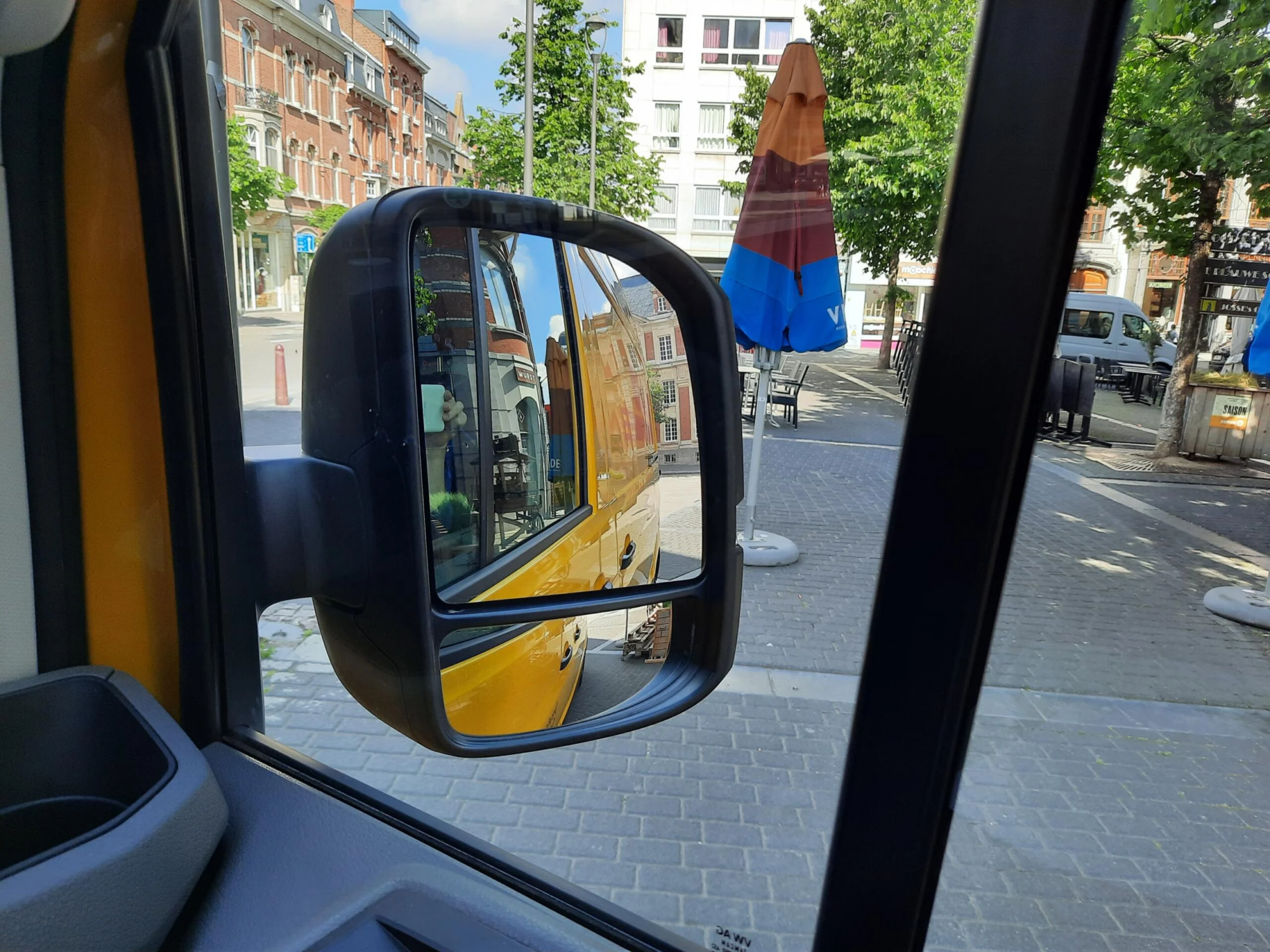
FlexCurb developed two tools for curb management: a planning platform for cities and a driver app, FlexCurb
These experiences revealed a central truth: no amount of funding or technology can replace the slow, patient work of building relationships.
In the follow-up GLEAM NSR project, Mechelen, Leuven, and Le Havre Seine Métropole (along with Rotterdam and Aarhus) established structured city dialogues focused on trust-building and long-term cooperation. Groningen, meanwhile, developed a city-wide framework for parcel lockers, integrated with its broader mobility hubs strategy instead of a piecemeal approach.
At first, acknowledging failure felt risky. Within the EU project ecosystem, transparency can raise eyebrows. Admitting that a pilot did not work may raise questions from auditors or funders, and few organisations wish to be seen as 'the one that failed.'
Yet the cities that chose honesty found that examining what went wrong helped them redesign processes and, in many ways, achieve more meaningful results than if everything had gone smoothly.
Turning setbacks into progress
This shift towards honesty is already paying off. Flexible parking is now legally possible in Belgium—though not directly because of FlexCURB. Meanwhile, GLEAM NSR and GREEN-LOG are developing regional frameworks that integrate lessons on data, governance, and trust into new pilot designs.
Both projects devote significant time and resources to stakeholder engagement, though in different ways. Leuven, for instance, finds value in working with a horizontal partner (such as a university) to guide engagement methods and structure, while retaining leadership over on-site activities and local dialogues.
Perhaps the most important outcome, however, is cultural. Teams have learned that transparency does not weaken credibility—it strengthens it. Sharing what did not work helps others avoid similar pitfalls and builds a more resilient, self-correcting community of practice.
A culture of honest innovation

FlexCurb developed two tools for curb management: a planning platform for cities and a driver app, FlexCurb
The 'epic fails' described here may sound discouraging, but they actually signal maturity. Urban freight is complex: it intertwines regulation, infrastructure, behaviour, and economics. Failure is inevitable when coordinating so many moving parts. What matters is the response.
By reframing setbacks as learning opportunities, cities are creating space for dialogue, adaptation, and genuine innovation. The next frontier is not just better tools or policies—it is better communication.
Imagine a community where project partners feel safe to say, 'This did not work—and here is why.' Such honesty and openness would save time, reduce frustration, and speed up progress toward sustainable, efficient logistics systems.
In the end, the greatest achievement may not be a new app or pilot, but a new mindset. By embracing one’s 'epic fails,' the urban freight community is becoming stronger, more trustworthy, and ultimately far more effective.
Click here to read the article in its original format.
About the authors:
Lorena Axinte, Senior Mobility Consultant, Bax Innovation. Axinte has a background in urban and regional planning. She currently collaborates with changemakers across sectors to turn ideas into mobility and logistics projects that deliver meaningful societal impact. Her portfolio includes projects such as GLEAM NSR, GreenTurn, and GOLIA. Outside of work, she supports bike buses and other active travel initiatives whenever possible.
Marij Lambert, Project Coordinator, City of Leuven. Lambert leads smart logistics initiatives, including GLEAM NSR, GREEN-LOG, and FlexCurb. Her work focuses on Urban Vehicle Access Control, curbside management, and Logistics-as-a-Service. Drawing on Leuven’s living labs, she prepares data-driven policies to advance sustainable urban logistics.
 Marij Lambert