
Cycling Lifelines
Regional cycling networks act as a force multiplier to public authorities working to decarbonise transport, while also offering a highly sustainable way to harness the benefits of tourism. Moreover, regional transport strategies, combined with cycling tourism initiatives, can help alleviate challenges linked to transport poverty and depopulation.
On a Friday afternoon, in November last year, I shut down my laptop and wheeled my bike outside for a long ride from Brussels to the port of Calais. Usually, planning a route such as this is prone to going awry with missed turns, unforeseen deviations, or unsuitable way-types; instead, I rolled into Calais precisely at the predicted hour, having spent the past twelve hours almost entirely on segregated cycle paths cutting through the Flemish countryside to the French coast. The ease with which I got from A to B whilst bypassing unsafe traffic conditions was a real vindication of the cycle network as a whole in this corner of Europe. Although not entirely perfect, an entire region is being stitched together by cycling-specific infrastructure, and the results are worth spreading.
Cycling has been on a journey these last 6 years. It started with a pandemic-induced bang, as health advice encouraged citizens to avoid public transport and cities were suddenly car-free. In the years since, the cycling industry has had to struggle to first meet this demand, navigate supply chain disruptions, and then the slowdown in consumer spending after 2022. Politically, this renewed emphasis on cycling as a solution culminated in the European Declaration on Cycling in 2023, and efforts to solidify cycling’s place in the European modal split continue with the recent EU fuel-saving recommendation to replace trips with walking and cycling when possible.
Despite industry struggles, the data on daily cycling is trending positively. Cities such as Paris and London have made great strides to incorporate cycling as a fully-fledged transport mode, and everyday commuters have been provided with greater choice than ever before with the rise of micromobility services and their fleets of e-bikes. Time and time again, when strikes and disruptions affect transport networks in cities such as Brussels or London, it is the humble bicycle that comes to the rescue, but the bicycle is not solely an urban mobility solution.
Much like the COVID-cycle boom brought bicycles to the streets of many European cities, it also grew in appeal across entire regions and rural areas. Sometimes for daily errands, other times for holidays and of course for sport, but always for getting from A to B reliably and enjoyably.
Across Europe’s regions, cycling is here to stay: it is unlocking new lifestyles for underserved communities, providing a lifeline to left-behind places and building a new tourism industry that maximises benefits and minimises negative impacts for host regions.
Connecting the dots
It is perhaps no surprise that one of the spiritual homes of cycling, the Region of Flanders, is leading the way in developing regional cycling. Their policy is ambitious: 30% of all trips to be made by bicycle and zero cycling fatalities on Flemish roads by 2040. Importantly, they emphasise ensuring a seamless transition from cycling to other sustainable transport modes, which will ideally result in an ever-greater number of Flemish people jumping on their bikes without a second thought.
Home to some of professional cycling’s biggest events, the region and its second-largest city, Ghent, also carried the political torch for cycling, following the European Declaration on Cycling in 2023, when they hosted the biggest-ever edition of the Velo-city Conference in 2024.
In Flanders, the committment to ‘More and better cycling’ as a solution is very real and revolves around four concrete objectives:
- Cycling in Flanders is inclusive
- Safe and comfortable cycling routes
- Hoppin points (multimodal hubs)
- Bicycle transport in logistics
Beyond the cities, where motor traffic speeds are often higher, ensuring that cycle routes are safe and comfortable is of paramount importance. As I experienced, Flanders already has a well-developed network of Fietsnelwegen, long-distance segregated cycle routes connecting the major residential centres with schools and employment zones, and this network continues to expand—as does the share of e-bike commuters in Flanders, providing evidence of its success.
Not everyone has to cycle the whole way; by focusing on developing the ‘Hoppin’ points, the bicycle instead becomes the ideal feeder system into an increasingly efficient and accessible public transport system. It might seem basic, but even just ensuring the presence of bicycle racks at a rural bus stop is all that is needed to increase the catchment area of a bus route, improve rural youth mobility, and discourage dependence on private cars.
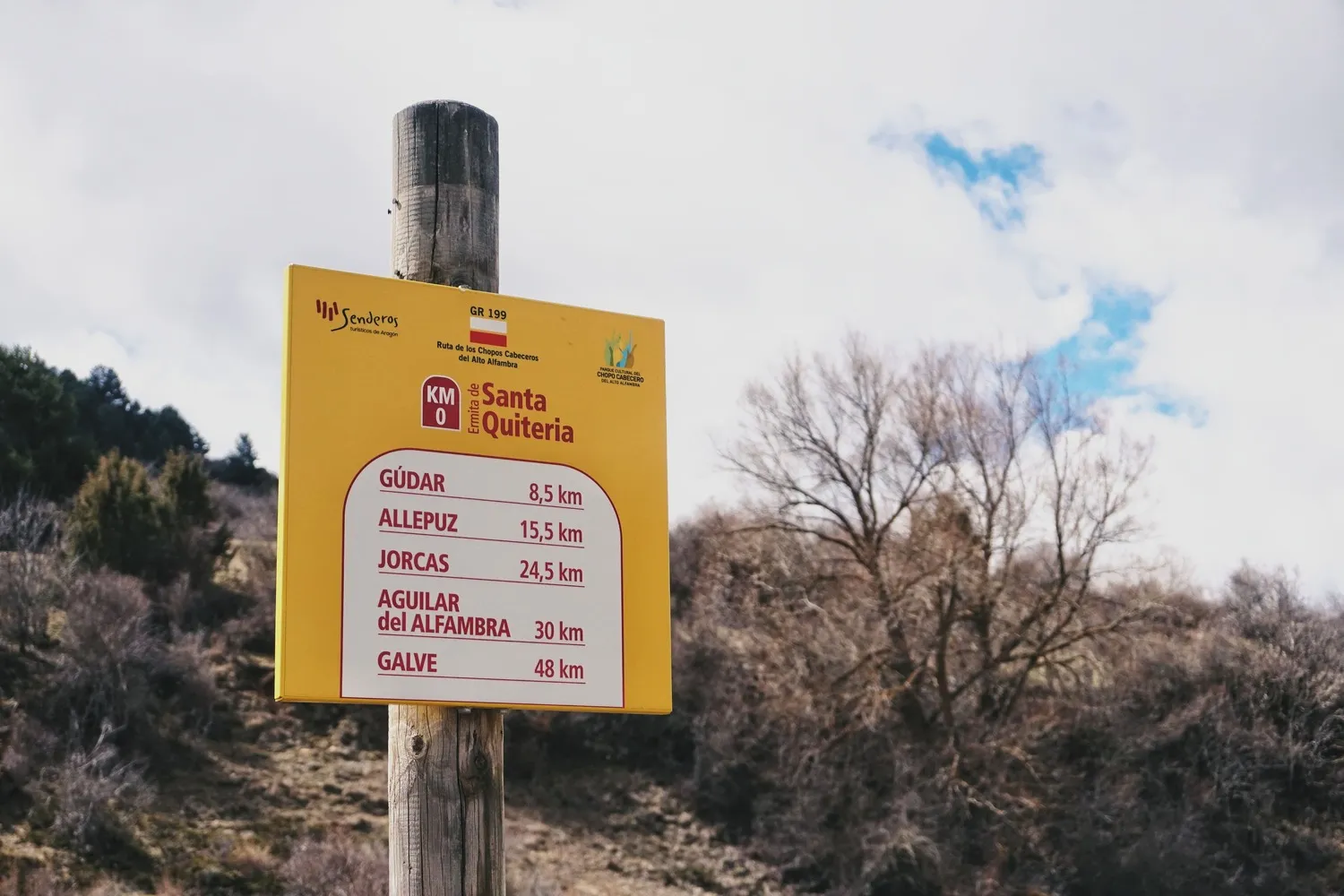
Sign indicating the Ruta de los Chopos Cabecero — Credit: Ernesto Pastor, Montañas Vacías
Business or pleasure
Cycling in Flanders is a cross-government collaboration between numerous departments from the Agency for Roads and Traffic and the Flemish Waterways Agency, to the Flemish Cycling Embassy and VISITFLANDERS. The latter is crucial in building resilience within the Flemish rural economy and employs the bicycle as the ideal tool to support the region.
Under ‘Flanders: The ultimate paradise for every cyclist’, various themed cycling routes are recommended for all ages, abilities, and preferences, along with resources to aid with accommodation planning and more. The infrastructure used by tourists is the same as that used by commuters; this dual use is precisely why cycling reinforces rural resilience.
‘Teruel Exists!’
The population density in rural Flanders is, admittedly, towards the higher end of the scale for rural regions, with the province of West Flanders, through which I cycled that November night, averaging around 391 people per km². At the other end of the scale, with a mere 28.6 people per km², lies the Serranía Celtibéria—a place ‘twice the size of Belgium, with a population density similar to Lapland or the Scottish Highlands’, as described on the Montañas Vacías project website.
Teruel, a province within this region, has been on the frontline of rural depopulation and transport planning neglect since it began to fall behind the rest of Spain in the 1990s. Indeed, there is a running joke in Spanish media that Teruel does not, much as a mythical place, exist at all. The campaign group, ‘Teruel Existe’ (literally, ‘Teruel Exists’), has been fighting for the province’s right to transport connections and redevelopment funds since its founding in the 1990s. In recent years, a project has been established to play to the region’s strengths as a mythical place of natural beauty and exploration to capture some of the benefits of the bicycle boom.
The Montañas Vacías Project, or Empty Mountains, is a volunteer-built cycling network of farm tracks and trails criss-crossing the sparsely populated yet incredibly beautiful region of Teruel, a former mining area with left-behind villages and an ageing population. The initiative seeks to attract adventure cyclists by creating what its founder, Ernesto Pastor, describes as a ‘story’ in motion, where ‘the traveller feels like the protagonist, and has a role in the history of the region and its struggle with depopulation’.
In practice, the project connects local businesses and residents who provide services and authentic experiences along the route, while these service points increasingly become community hubs where people gather, engage, and welcome travellers passing through.
Led by Pastor, a local to the area, the network develops train-accessible cycling routes that link natural landscapes, historical sites, and remote villages and hamlets. Each route tells a story of the landscapes and peoples who inhabited it, with the area also gaining recognition as the first official ‘Quiet Trail’ from Quiet Parks International.
Even in the absence of traditional funding, cycling has become a lifeline for rural communities in Teruel, and sustainable tourism steadily expands with each passing year.
Building on this success, Teruel’s government has implemented the Turicleta self-service e-bike sharing system as yet another way to attract visitors to the region. The app and self-service secure kiosks make it a viable service offering and an entry point for promoting cycling tourism to a wider audience who do not necessarily travel with their own bikes. Furthermore, this digital-first approach is replicated by the award-winning Red de Pueblo (Village Network) app, which connects residents to share journeys and ask for favours and mutual assistance where services may be lacking.
The lack of communication routes and public transport connecting the territory has long been a concern for territorial advocacy movements like Teruel Existe. Antonio Abad, Deputy Delegate for Assistance to Municipalities and European Programmes, captures this shift in perspective, noting that the absence of major infrastructure has allowed greenways and rural paths to emerge as transport alternatives and ‘gateways to unspoiled nature, the tranquillity of trails, the mosaic of crops, the dark and clear skies, and the wide horizons’. In this reading, what might be elsewhere be considered a deficit becomes a defining asset—one that public authorities have the responsibility to ‘recognise, protect, and actively promote’ as a driver for development and long-term regional future.
Echoing this sentiment, cycling infrastructure and active mobility investments are one of the best value-for-money returns in transport policy. According to the European Cyclists’ Federation, one mile of a high-quality segregated bicycle lane costs 240 times less than the same length of conventional highway and experiences significantly less wear and, as a result, requires less subsequent maintenance. Further developing trails will only benefit the region and locals, avoiding the pitfalls of mass tourism and preserving ‘Spanish Lapland’ for all to enjoy.
Starting with cycling tourism routes and the local economy benefits that they bring can be the first step towards building a wider network inspired by the Netherlands and Flanders. Ultimately, the goal needs to be for anyone, whether in cities or rural regions, to be able to mount their bicycle and be confident in knowing that they can ride safely from A to B.
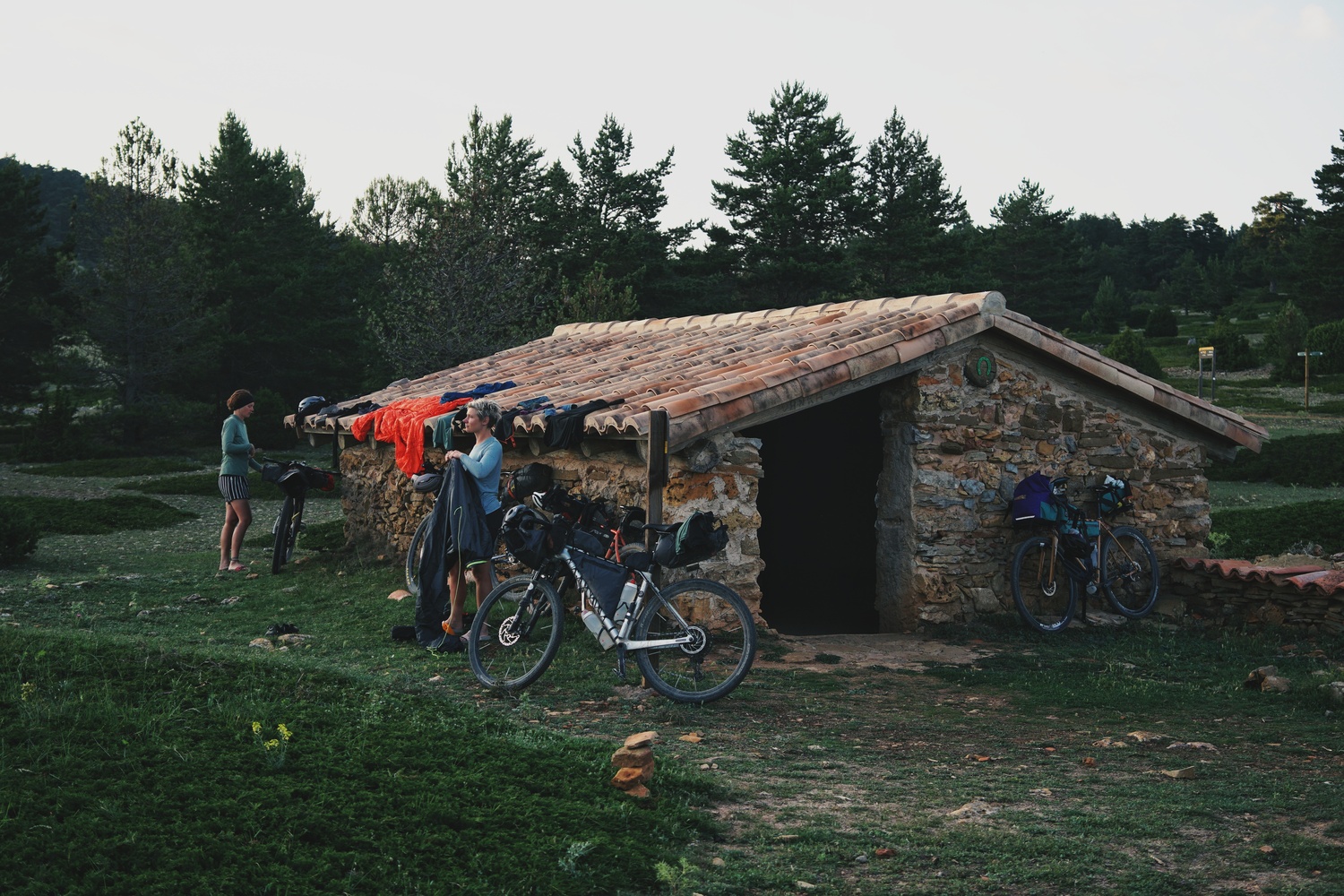
Bikepacking in the Montañas Vacías — Credit: Ernesto Pastor, Montañas Vacías
Click here to read the article in its original format.
About the author:
Ben Luoma, Project Manager & Regions Working Group Co-Manager, POLIS. Besides being a keen ‘bikepacker’, Luoma is the Regions Working Group Co-Manager and works on multiple projects related to sustainable mobility, including the European Urban Mobility Observatory. A development economist by training, he has spent the past six years working on cycling and sustainable mobility in Brussels.
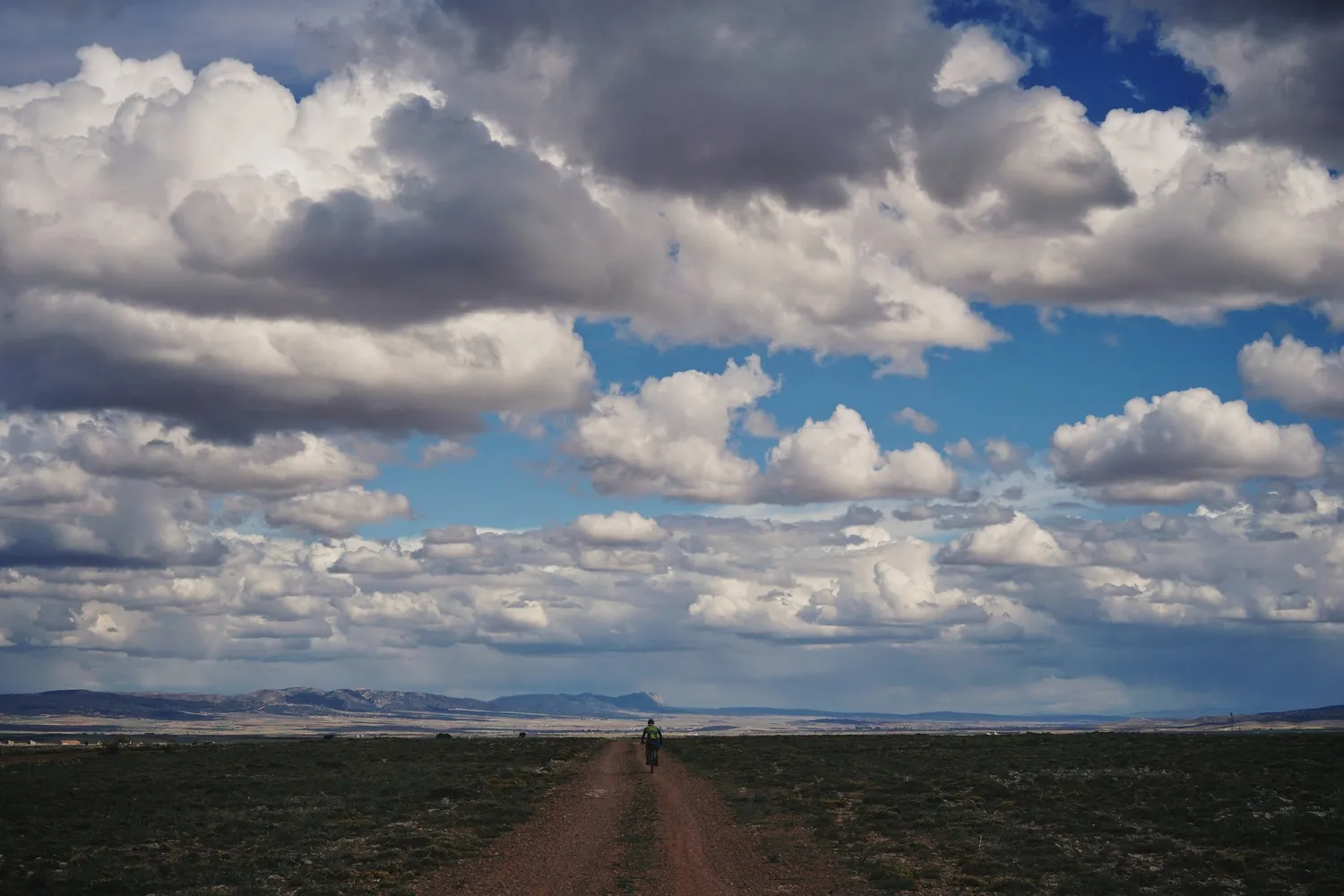 Credit: Ernesto Pastor, Montañas Vacías