Budapest's metropolitan night transport set for major redesign
Budapest's night-time public transport network will undergo a significant transformation from 1 July 2026: it will do so by introducing more frequent services, improved coordination between operators, and stronger connections between the city centre, outer districts, and surrounding municipalities.
The reforms, announced by Hungary's Minister for Transport and Investment, Dávid Vitézy, build on earlier efforts to modernise the capital's public transport system. Following the extension of metro operating hours in 2025, the redesign of the night bus network represents the second phase of a broader strategy to adapt services to changing travel patterns across Budapest and its rapidly growing metropolitan area.

Night transport services in Budapest — Credit: BKK
According to Vitézy, the existing night network, much of which was developed nearly two decades ago, no longer reflects the region's demographic and spatial realities. Population growth in outer districts and increasing suburbanisation have generated new mobility needs, particularly during off-peak hours.
The revised network, developed jointly by the Budapest Transport Centre (BKK) and MÁV-Volán following a year-long planning process that included several rounds of public consultation, aims to provide more direct routes, better integration with the daytime public transport system, and expanded service coverage in several areas currently underserved at night. The redesign sees the closer coordination between Budapest's night bus services and the regional Volán bus network, marking a step towards treating the capital and its surrounding municipalities as a single mobility system.
New routes and new times
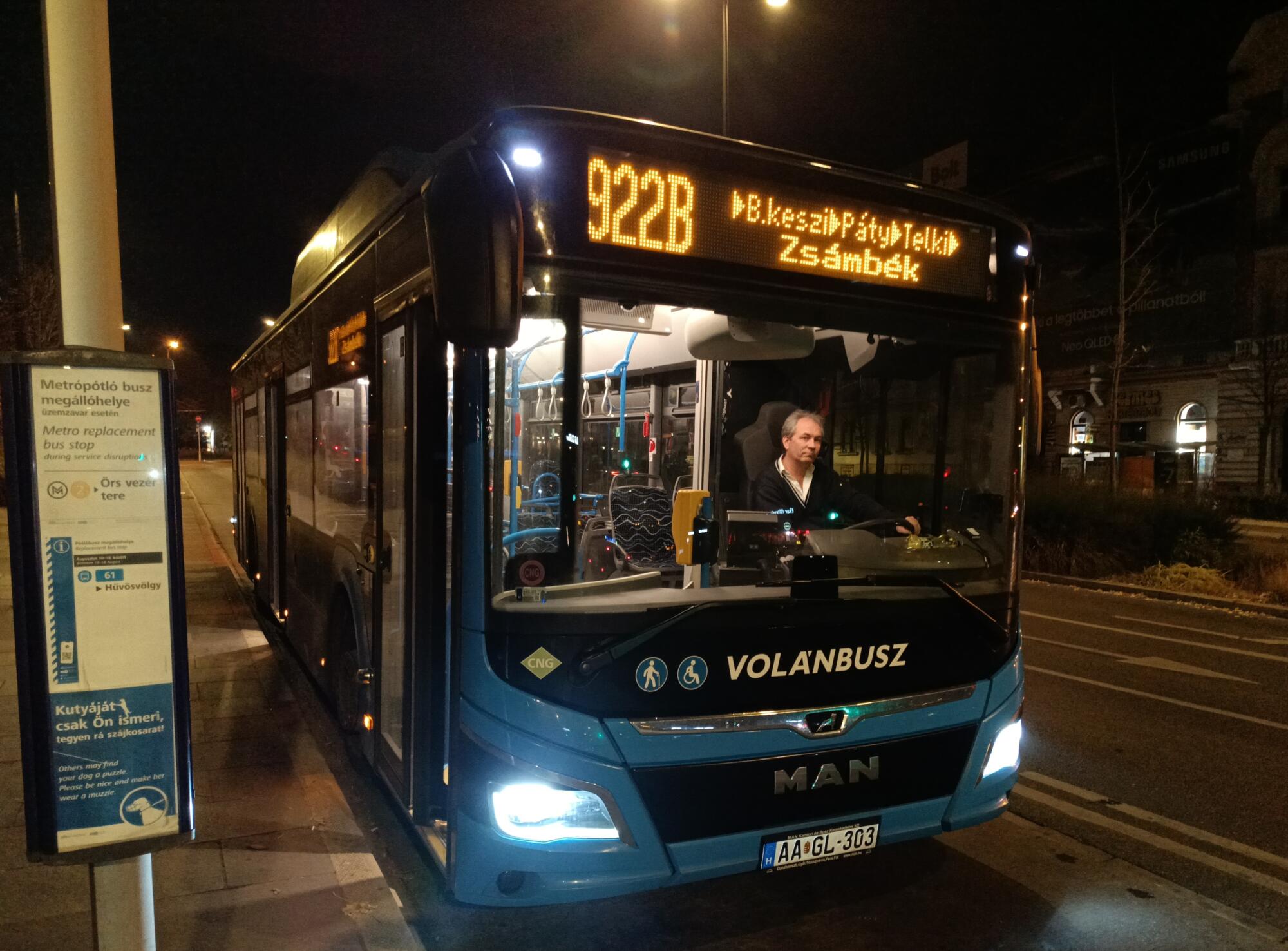
Several metropolitan destinations will benefit from improved night-time accessibility. New direct services will connect central Budapest with municipalities including Gödöllő, Szentendre, Pécel, Gyál, Nagykovácsi, Solymár, Budaörs, Törökbálint, Budakeszi, and Szigetszentmiklós. In western parts of the metropolitan area, new routes will provide more direct links between the city centre and Budaörs, Törökbálint, and Budakeszi, operating at higher frequencies and serving key locations across both Buda and Pest. Residents travelling towards Gödöllő will also gain a direct overnight connection from central Budapest, passing through several intermediate communities including Cinkota, Szilasliget, and Mogyoród.
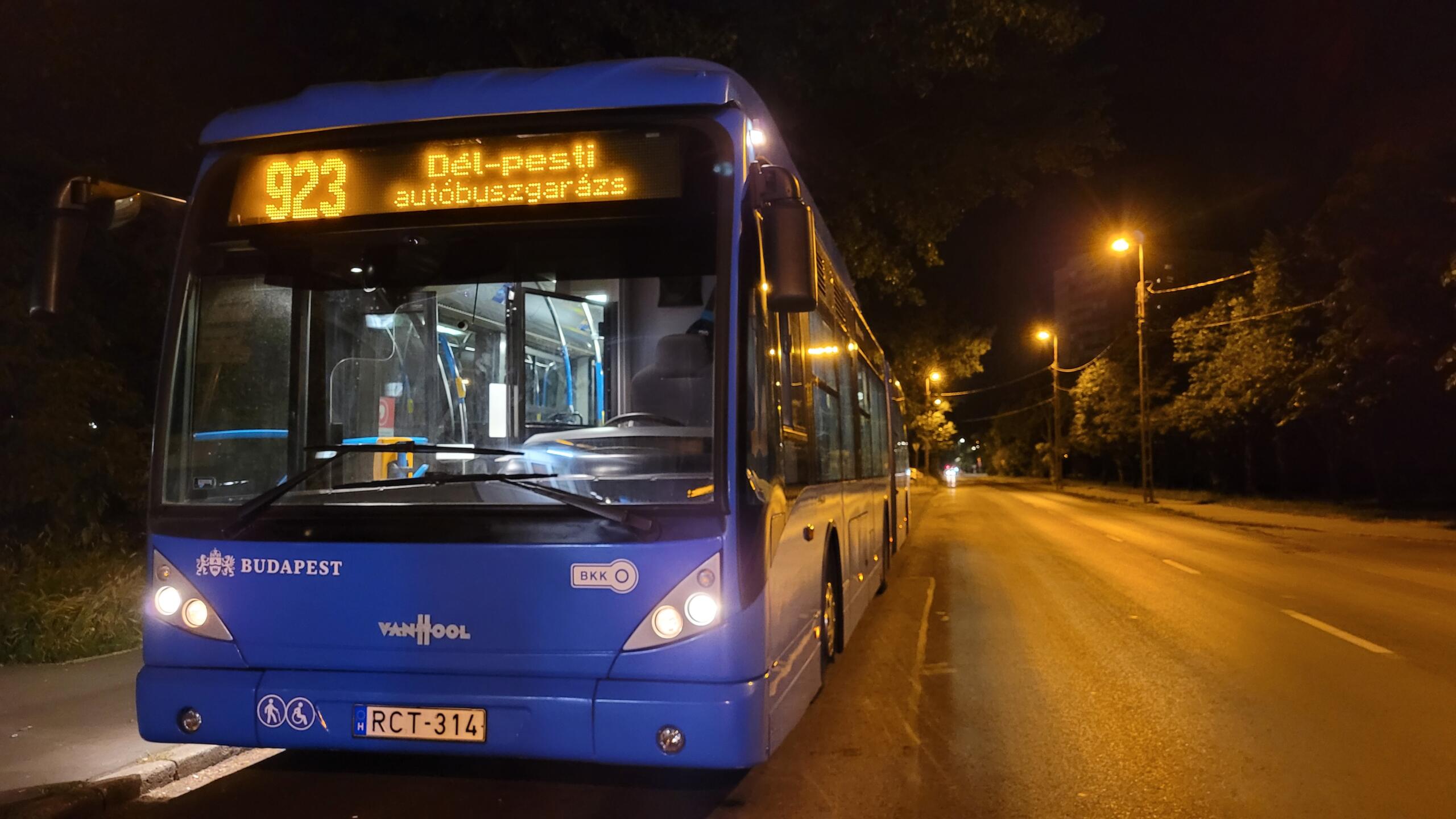
Bus 923 connects Békásmegyer HÉV station and the South Pest bus garage — Credit: Krepper, CC BY-SA 4.0
The eastern and northern corridors will likewise see improvements. Overnight services towards Szentendre, Budakalász, and Pomáz will become more frequent and better connected to routes arriving from the city centre, while Pécel will receive a new direct service operating throughout the night. Further changes will improve access to Gyál, where services will provide more comprehensive coverage across the municipality, as well as to Nagykovácsi and Solymár, where new connections will be coordinated with both city-centre bus services and late-night rail arrivals.
In the south, Szigetszentmiklós will benefit from more frequent overnight connections via Csepel, with routes extended to serve a larger portion of the town than before.
Across the network, the reforms are intended to reduce transfer times, simplify journeys, and make late-night travel more attractive for both city residents and those living in the surrounding metropolitan region. The changes are intended not only to improve mobility within Budapest but also to strengthen connectivity across the wider metropolitan area. According to the ministry, integrating transport planning across municipal boundaries is increasingly necessary to respond to ongoing suburban growth and changing commuting patterns.